
Chatbot Best Practices for Better Results
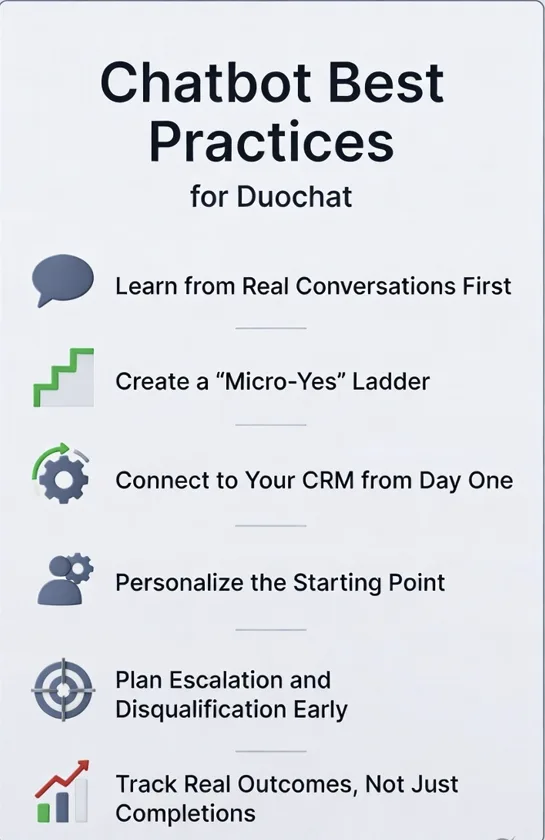
Chatbots are powerful tools for engaging visitors, qualifying leads, and boosting conversions. But many fall flat because they focus on flashy features instead of smart design and real user needs. Here’s a clear, practical guide to building effective chatbots —straightforward tips that drive real outcomes.
Why These Practices Matter
Basic rules like short messages and clear language are important, but true success comes from thoughtful structure: understanding your users, integrating systems smoothly, personalizing experiences, and measuring what actually counts. These six practices can be applied one at a time for quick wins—no full rebuild needed.
1. Learn from Real Conversations First
Don’t start designing from scratch with guesses. Review past chats, support tickets, sales calls, and surveys. Note the exact words people use, common questions, objections, and what helps them decide.
This “conversation archaeology” helps you build flows that feel natural and speak your customers’ language. Use real patterns to create better questions and responses that actually qualify leads effectively.
2. Create a “Micro-Yes” Ladder
People don’t owe you their time or data. Each question should earn the next one by offering value first—like helpful info, relevant suggestions, or showing you understand their needs.
Instead of blunt questions (“What’s your company size?”), frame them helpfully: “To recommend the best plan for your team, how many people are you working with?” Give something back at every step so users stay engaged and trust the conversation. Test your flow: after each question, ask “What did the user get in return?” If nothing, rephrase, delay, or remove it.
3. Connect to Your CRM from Day One
Speed matters. Fast follow-up on leads makes a big difference. Set up CRM integration before launching so qualified leads flow straight into your system with all details intact—not just name and email, but company size, needs, and timeline too.
This closes the gap between chat and sales action. With duochat, mapping fields is simple and ensures nothing gets lost. Test it early so every good conversation turns into a real pipeline opportunity right away.
4. Personalize the Starting Point
You often know useful details before the chat even begins: the page they’re on, how they arrived, or if they’ve visited before. Use this context for a better first message.
- On pricing or demo pages: Jump straight to qualification.
- On blog or resource pages: Start with a helpful, research-focused hook.
- For returning visitors: Skip intros and go directly to what they need.
Simple conditional logic in duochat makes this easy. Start with page-based tweaks for the biggest impact, then add more layers like traffic source. Personalization boosts relevance and completion rates quickly.
5. Plan Escalation and Disqualification Early
Every flow hits limits. Design handoff to a human and clear “not a fit” paths before building the main conversation.
Identify signals for:
- Negative routing: Users who aren’t a good match—politely disqualify and suggest alternatives.
- High-intent escalation: Complex questions or custom needs—smoothly connect to sales with a natural message like “This sounds specific—let me get the right person for you.”
Treating escalation as an afterthought loses hot leads. Planning it upfront turns potential drop-offs into booked meetings or honest next steps.
6. Track Real Outcomes, Not Just Completions
Completion rate (finishing the chat) doesn’t equal success. Focus on meaningful results:
- Qualified leads sent to CRM
- Nurtured prospects added to sequences
- Successful handoffs to humans
- Helpful answers for non-buyers (deflections)
Review drop-off points weekly, make one small change at a time (rephrase a question, reorder steps), and measure over a couple of weeks. This focused approach often improves results significantly without big overhauls.
Putting It All Together
Combine these for a strong setup:
- Base flows on real data.
- Build value at every step.
- Integrate CRM immediately.
- Personalize entry points.
- Prepare escalation paths.
- Optimize based on actual pipeline impact.
With duochat’s tools, you can implement this efficiently—no coding required. The goal is simple: every conversation should lead to a clear, useful outcome that supports your business.
Quick Tips for Success
- Keep language friendly and conversational.
- Test thoroughly with real scenarios.
- Start small: Pick one practice to improve today.
- Regularly review analytics to refine.
Following these practices turns your chatbot into a reliable conversion engine that qualifies leads faster, improves user experience, and delivers measurable results. Ready to build or optimize yours? Contact duochat